How to Play Pegfinity
First-hour loop: launch, cash out, buy a board-changing upgrade, then launch again.
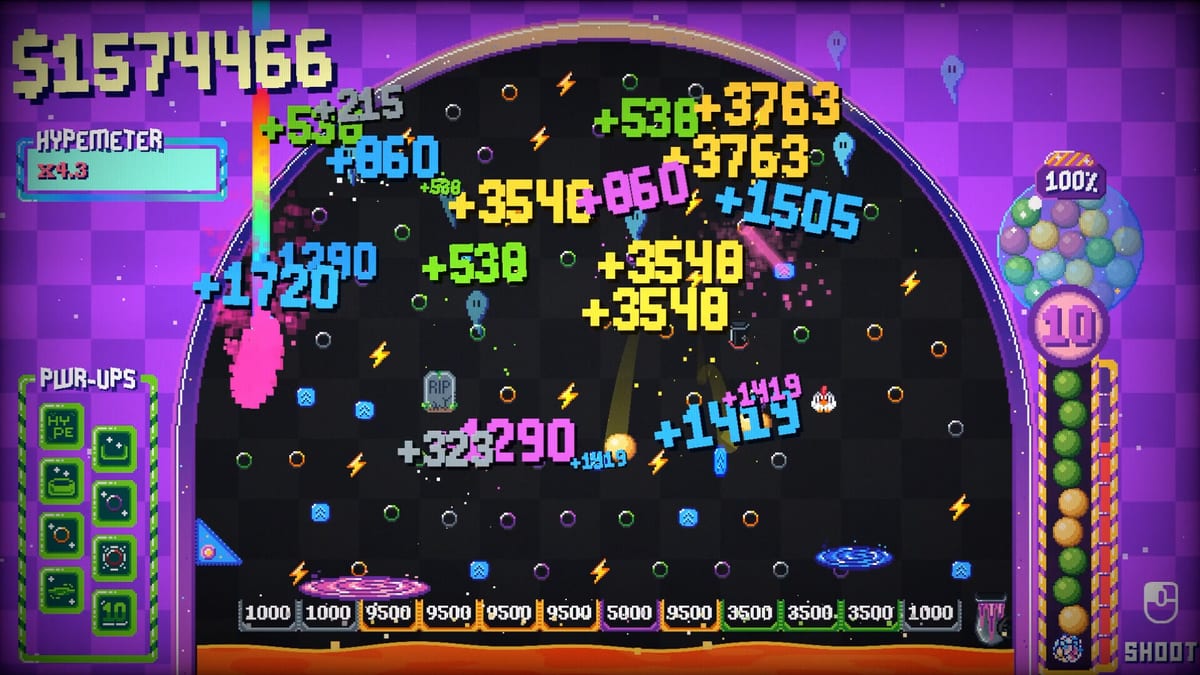
Pegfinity is a single-player pachinko incremental from Fragment Ventures AS. You do not clear stages, draft a deck, or invite friends. You aim from the top of a randomly generated board, fire a ball, watch it ricochet through pegs, and convert that chaos into cash you spend between runs. The Steam version launched on August 14, 2026 with more than 150 permanent upgrades. The itch.io and Steam demos taught the same loop with a 35-upgrade cap. If you understand the first hour, the rest of the tree is mostly taste: which toys you unlock, and which nodes you skip.
This page is the onboarding guide. Pair it with Pegfinity controls for the power meter, Hypemeter combos for scoring, and the upgrade order planner when you are ready to spend.
The loop in one paragraph
A run starts with a short ball queue and a mostly quiet board. You hold to charge, release to shoot, and hope the first bounce does not die in a dead corner. Pegs add score. Special pegs add extra hits, extra balls, lava, beams, or spines. Baskets at the bottom catch whatever survives. When the queue is empty, you take the cash into a skill tree, buy one or more permanent nodes, and start a new board. Every upgrade you buy stays. The board layout does not. That mix of permanence and randomness is the whole pitch.
First ten minutes
Ignore the urge to buy every cheap node. Early cash is a teaching budget. The useful first purchases are peg value, extra peg density, and the first special peg you can afford — usually Cactus once it appears. Baskets look friendly because they are labelled as catch-more-balls, but several Steam reviews and demo comments treat the basket branch as a trap: you pay a lot for a small catch bonus while the board itself stays boring. The gadget tier list spells that out. For the first session, spend on things that fire, bounce, or multiply hits.
Aiming is the other early skill. The power meter sits on the right or lower-right of the UI. A lot of negative Steam reviews exist because players spent an hour staring at that meter instead of the board. You do not need a perfect snipe every shot. You need a charge you can repeat without thinking, then a few high shots that clip the top row so the ball has more pegs to fall through. Details live in the controls guide.
What the demo taught, and what 1.0 adds
The Next Fest demo let you freely mix up to 35 upgrades. That cap made every node a real choice: buy Cactus, or save for Portal, or grab Hypemeter. Full Pegfinity keeps the same philosophy with a much longer tree. You can still skip a branch. You can still over-save for a expensive toy. You can still brick a run by unlocking too many weak ball types so watermelons and other high-impact balls appear rarely. The ball tier list covers that dilution problem.
Expect a short campaign-shaped playtime. Positive reviewers call it a five-hour toy with flashing lights. Negative reviewers call the late grind slot-machine idle. Both are describing the same curve: early unlocks feel huge, later nodes cost millions, and without a prestige reset the last stretch is just more of the same board. Use how to complete the upgrade tree if you want to finish without stalling on Graveyard or bin upgrades.
A sensible first build
You will not copy a speedrun. You will copy a priority list:
- Peg value and extra pegs so every bounce pays.
- Hypemeter so combos survive between balls — see how to stack combos.
- Cactus, then UFO or Frog, from special pegs.
- Portal or pinball bumper only after you have a peg that can feed it, covered in gadgets.
- Ignore most basket nodes until the board already creates extra hits on its own.
If a node says it adds a new ball type, pause. New balls are exciting on the tooltip and painful in the queue when they replace a ball that was already printing money. Unlock them after the board can support variance, not before.
How a typical run should feel
Early runs last a handful of shots and pay enough for one node. Mid runs last longer because gadgets keep balls alive. Late runs can look idle: a UFO beams pegs, a laser chains, a cactus feeds a portal, and you are only launching to restart the machine. Steam players asked for an auto-launcher for exactly that reason. Patch 1.2.3 auto-fires at max charge; it is a cap, not an AFK gadget. Treat late Pegfinity as a timing game: charge during the spectacle, let the cap fire or release when the queue allows, and watch the board with your peripheral vision instead of locking onto the meter. Common first-hour traps sit on beginner mistakes.
When a run pops a treasure chest, that is a New PWR-Up. Hit it if you can; it is one of the few on-board rewards that is worth a dedicated snipe. If the chest UI gets stuck, check known issues before restarting blindly.
Platforms and setup
Buy the full game on Steam. The itch.io demo is still a fair taste if you want the 35-upgrade slice. Steam Deck users report the one-button loop feels comfortable; mouse-and-keyboard on desktop is the intended aiming method. There is no cloud save confirmed at launch, and no official Discord listed by Fragment Ventures. Bookmark the official links page for studio channels.
If you care about ranking every node before you spend, open the upgrade tier list next. If you just want a shopping list, skip rankings and use the upgrade order planner.
Frequently Asked Questions
Quick answers players ask after the Steam launch.
Is Pegfinity a roguelike?
No. Boards are random, but upgrades are permanent. You are not drafting a run-only build. That is why skip order matters — see the upgrade order planner.
How long is Pegfinity?
Most Steam reviews describe a few hours to a short evening. There is no prestige layer, so the campaign is the tree, not an endless reset.
Should I buy baskets first?
Usually no. Spend first on peg value, Hypemeter, and special pegs. Baskets are ranked on the gadget tier list.
Where do I play?
The full game is on Steam. A smaller demo remains on itch.io. Pegfinity is single-player only.